Speaker Faustino “Bojie” Dy III: A Test of Leadership!
Impeachment was never intended to be a race over who could file a complaint first, nor was it meant to become a gate where only selected cases are allowed to enter. It was established by the Constitution as a mechanism for accountability—so that when there are serious allegations against a public official, there is a fair and transparent process to examine and weigh them.
Yet today, the state of impeachment in the House presents a troubling picture—not because of a lack of complaints, but because of how the process is being managed. The reason given for refusing to accept certain impeachment complaints is that the responsible official was allegedly out of the country. In the eyes of the public, this is no longer a simple technical explanation, but a serious issue of transparency.
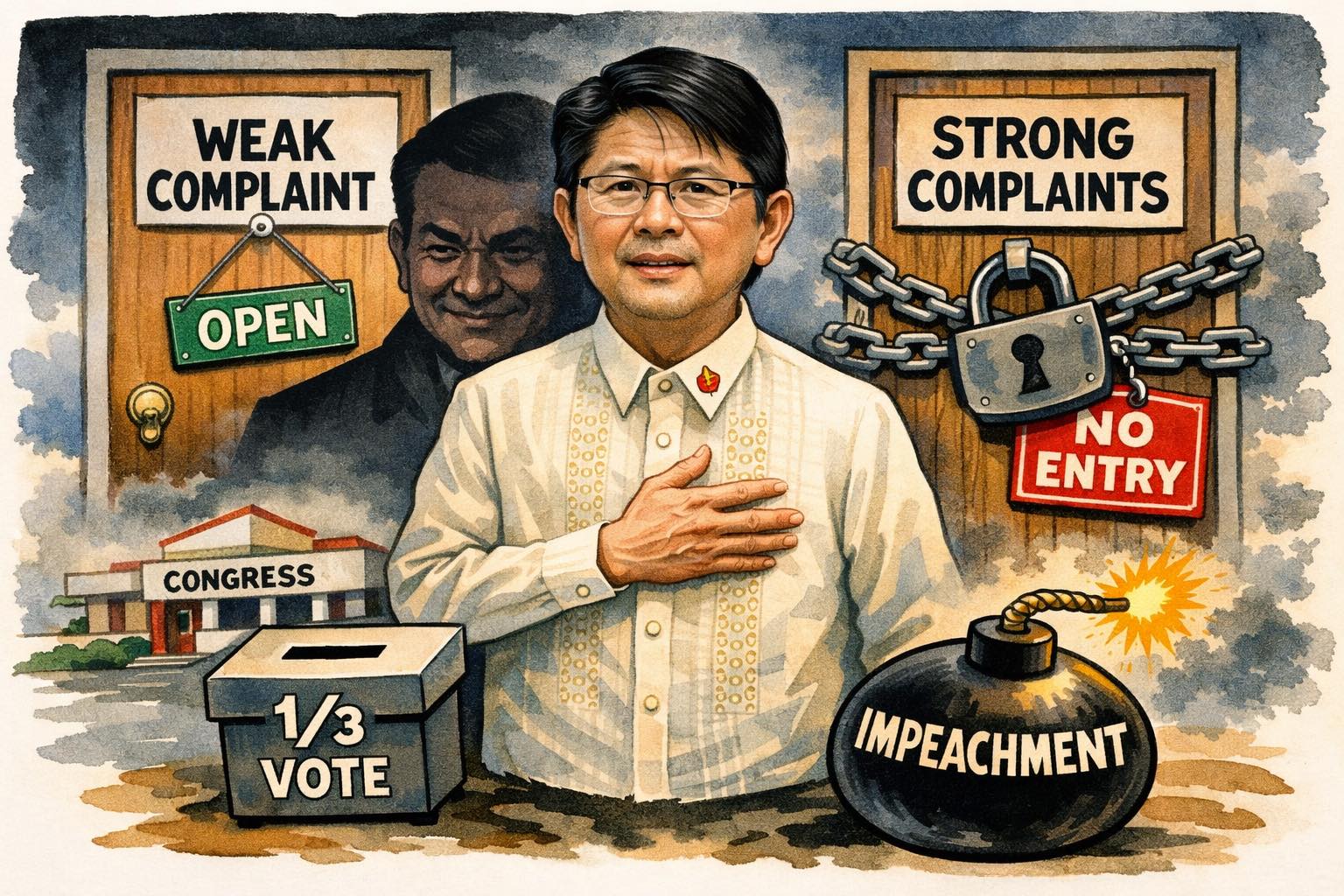
One impeachment complaint was initially filed by Atty. De Jesus. Many critics pointed out that it was a weak and thin complaint—lacking sufficient evidence and depth—and some viewed it as possibly intended to trigger the one-year bar, thereby blocking stronger complaints. Despite these concerns, the complaint was allowed to proceed.
More recently, two additional impeachment complaints were filed, which many observers consider stronger and clearer in their allegations and which came from the opposition. However, these were not accepted. They were not docketed. They were not referred. They were stopped at the door. From a strictly technical reading of the law, this may be explained. But from the public’s perspective, the message is clear: the process is not fair.
This is where the deeper problem emerges. If the second and third impeachment complaints are not accepted, it is easily interpreted that the House is not open to accountability but is instead protecting itself. This perception is reinforced by the belief that the institution remains under the influence of former Speaker Martin Romualdez, and that the change in leadership may be merely cosmetic rather than a genuine shift in principle.
At this point, Faustino “Bojie” Dy III faces a clear test. The Constitution grants the House the power to initiate impeachment. That power exists not to shield anyone, but to open the process and ensure fairness.
Accepting and docketing all impeachment complaints that meet the formal requirements does not mean that the accused is guilty. It simply means the House is willing to listen. But if the other two complaints are left untouched while the one widely regarded as weak continues to move forward, public perception will be unavoidable: the new leadership remains only a shadow of the old system.
In the end, the question is no longer about what the law says—but about what is being feared. If it is true that there are sufficient numbers in favor of Ferdinand Marcos Jr., why then is there fear in accepting the other impeachment complaints? Are they afraid that once voting begins and the one-third threshold is reached, the true positions of individual legislators will be exposed—recorded, remembered, and turned into a major issue in the 2028 elections?
Or is the fear that once the process is opened, the House will be pressured to fulfill its constitutional duty—to impeach the President and transmit the case immediately to the Senate sitting as an Impeachment Court? In truth, leadership that is confident in its numbers does not hide from process. Those who hide are often those who fear the light.
And there lies the true measure: will the House stand by the Constitution, or by fear of political consequences? History does not forget those who stood firm—but it remembers all too well those who chose to hide when the moment to take a stand arrived.