The Greenland They Want — and the Philippines That Was Almost Bartered Away
The interest of U.S. President Donald Trump in Greenland is not a sudden idea. For a long time, the United States has seen Greenland as important because of its Arctic location, its military bases, and now its mineral wealth revealed by melting ice. But behind this present-day interest lies an old and almost forgotten story — a story that also involved the Philippines.
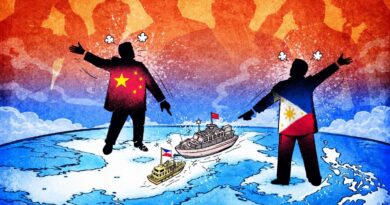
In 1910, when the United States had just taken control of the Philippines from Spain, America began to see itself as a new empire. At the same time, Denmark was struggling with the loss of land and influence in Europe. In this setting, U.S. and Danish officials discussed an idea: the United States would take Greenland, and in return, Denmark would be given some Philippine territories controlled by the U.S.
This was never turned into a formal agreement, but the fact that it was discussed at the level of governments shows the true nature of the colonial world. In the eyes of great powers, the Philippines was not seen as a nation with its own people and history, but as land that could be traded for larger interests.
If that land-swap had happened, Mindanao and Palawan could have become Danish territory. Palawan was important because of its sea routes, and Mindanao because of its vast land and rich natural resources. In that situation, the currency in Mindanao would not have been the peso but the Danish krone, and we might have held Schengen visas, free to travel across 29 European countries. The laws and government would have followed Denmark, not the Philippines.
Like the Inuit in Greenland, the people of Mindanao and Palawan would have had no real freedom to decide their own future. They would not have been able to vote on whether they wanted to become Danish or not. Lumad, Moro, and Visayan communities would have become subjects of another country they never chose.
If this had happened, the Philippines today would not be a united nation. Luzon might have remained American, while Mindanao and Palawan would have been Danish. Our identity, language, and sense of nationhood would have been broken by decisions made in far-away offices in Washington and Copenhagen.
The Greenland deal that never happened is a powerful reminder from history that in the age of empires, the lands and peoples of small nations like the Philippines were treated as pieces on a map to be traded. And at one moment in history, we almost disappeared into such a bargain without even knowing it.