Political Gambits of “Congressmeow” Barzaga!
The current predicament of Francisco Kiko Austria Barzaga, more popularly known as “Congressmeow,” is not evidence that the cause he opposed was wrong. What it clearly shows is that in politics, even a correct position can fail if pursued through the wrong method and without proper judgment. Reform does not endure without discipline and process.
Barzaga entered politics with strong family influence. His parents have long been active in local politics in Cavite—figures accustomed to slow, calculated, and institutional approaches to power. Because of this background, he learned early how systems operate and why restraint in speech and action is essential in political survival.
However, instead of applying those lessons in discipline, he chose a reckless political gambit: direct confrontation through social media. His anti-corruption and anti-oligopoly positions are legitimate and resonate with the public. The concentration of wealth and influence is a real problem in the Philippines, and it is equally true that very few are willing to speak openly about it.
But politics is not only about what is said; it is more importantly about how and when it is said.
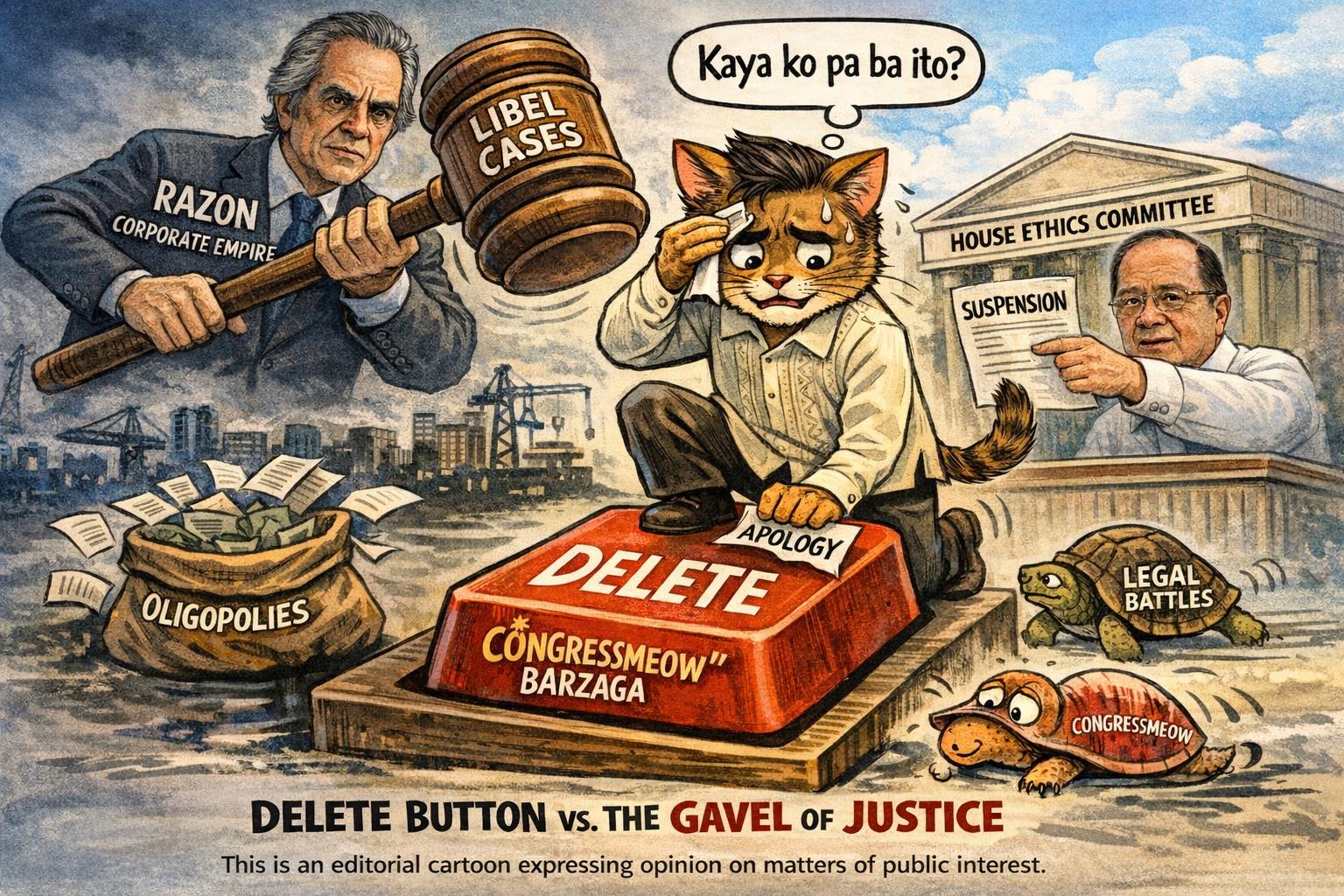
When he posted accusations against Enrique Razon Jr., he confronted a figure far more powerful than most. Razon is a billionaire with extensive interests in ports, regulated gaming, utilities, logistics, and infrastructure—sectors that are critical to the economy and closely linked to policymaking. Such power is not merely about wealth; it includes influence, access, and formidable legal capacity. Accusing someone of this stature requires a much higher standard of evidence and a far stricter process.
This is where the gambit became dangerous. The post was not preceded by formal institutional action or clearly presented evidence. Shortly after, Barzaga deleted the post and issued an apology. On a human level, the apology was appropriate. In political and legal terms, however, the cost was steep.
Deletion does not erase impact, and apology does not halt consequences. In law, what matters is what has been published—not subsequent regret. The sequence of actions—post, delete, apologize—undermined his credibility and shifted the discourse away from reform toward personal accountability. A political gamble intended to challenge power instead became a legal risk that rebounded against him.
The action taken by the House of Representatives’ ethics body underscores a basic reality: institutions protect themselves. Congress can tolerate criticism, but it will not tolerate actions taken without sufficient thought that expose the institution to legal and reputational harm. This is not a rejection of anti-corruption advocacy; it is a warning that reform must pass through process, not political gambling.
The lesson is clear and direct: think first before you post. In today’s politics, one reckless post can destroy credibility built over many years—even for someone from a family long close to power. A single careless statement can become the greatest regret of one’s political life.
The question now is not whether his cause was right. The real question is whether he can learn and choose discipline and institutions over reckless gambits—especially when confronting an oligarchy backed by power, wealth, and systems. In politics, courage without restraint is not strength—it is vulnerability.