Part 2: Betrayal of Public Trust: Why Failure to Act Can Be Impeachable!
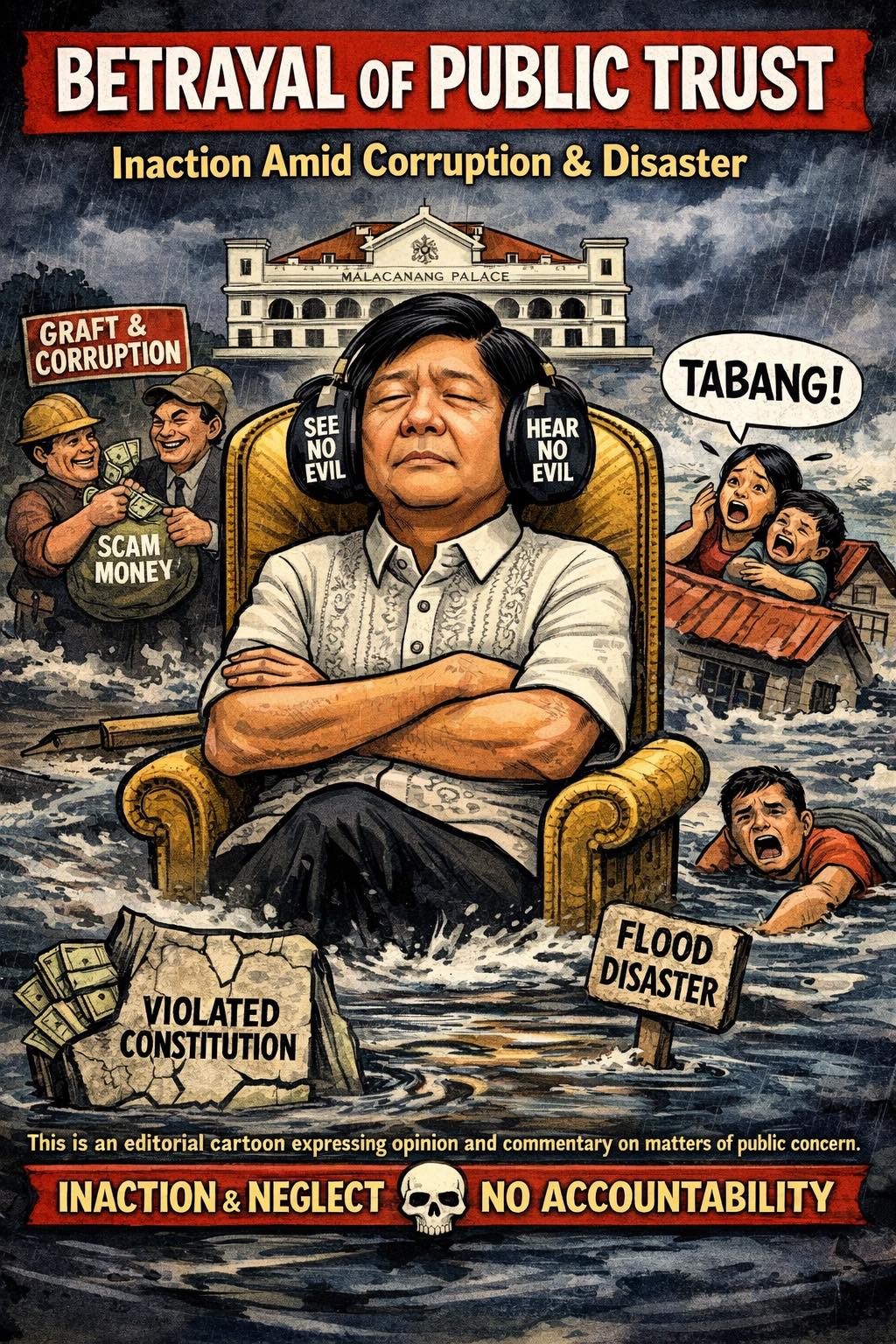
The next question is no longer technical but constitutional: what does presidential failure mean under the impeachment provisions of the Constitution? The answer is clear in Article XI: the President may be impeached for culpable violation of the Constitution, graft and corruption, and betrayal of public trust.
It is important to clarify at the outset that the President does not need to personally steal in order to be impeached. The Constitution does not protect the principle of “clean hands but a dirty system.” Betrayal of public trust is a broad ground intended to capture situations where a leader fails in fiduciary duty and accountability to the people, even in the absence of a direct criminal act.
If the President fails to exercise constitutional control to remove or investigate officials clearly implicated in anomalies, fails to stop the release of funds despite evidence of irregularities, and fails to implement structural reforms even as damage continues, such failure may be considered culpable negligence that squarely falls under betrayal of public trust—a grave failure of leadership accountability.
Under legal principles, inaction can amount to abuse of discretion when it results in serious harm to the people. In the flood control scam, the harm is not hypothetical. It is evident in homes swept away by floods, farmlands destroyed, businesses paralyzed, and lives lost every rainy season.
Thus, the issue is no longer just about money. The issue is about the lives and dignity of the people. When the government fails to use public funds to protect citizens from disaster, and when systemic corruption is allowed through silence, the leadership itself fails in accountability and becomes part of the harm.
In a true democracy, the President is not merely a face in front of the camera during crises. He is the chief executive officer of the state. When there is no clear accountability at the highest level, the message of the system is unmistakable: corruption can continue as long as power remains silent.
In the end, the flood control scam is not merely an issue of the DPWH, politicians, or contractors. It is a constitutional test of leadership accountability. Where there is control, there must be accountability. And where power exists without accountability, it is no longer democracy—it is a license for abuse.
The question now is no longer simply who stole. The real question is this: how long will the nation accept that inaction by the highest leader carries no accountability? When floodwaters enter people’s homes, the Constitution can no longer excuse silence.