PART 1: Crossing the Line!
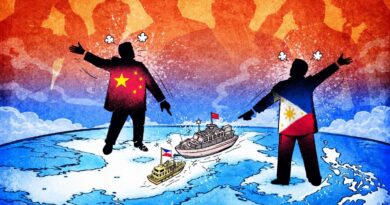
The tension between the Chinese Embassy and the Philippine Senate did not arise suddenly, nor was it driven by emotion or partisan politics. It began with a deliberate shift in diplomatic conduct: the decision to bring a disagreement out of formal, quiet channels and into the public arena. The trigger was a public statement by the Chinese Embassy criticizing several Philippine officials, most notably Commodore Jay Tarriela, spokesperson of the Philippine Coast Guard. Tarriela was not speaking as a private citizen; he was speaking in his official capacity, articulating the Philippine government’s position on developments in the West Philippine Sea.
This raises a fundamental question in international relations: does an ambassador or foreign embassy have the right to publicly criticize an official of the host country? Under established diplomatic practice, the answer is no. When a foreign government has objections, the accepted protocol is to raise them through the Department of Foreign Affairs, issue a formal diplomatic note, or address concerns through closed-door consultations. Publicly reprimanding a host country’s official—especially a uniformed officer tasked with national security—is widely regarded as a breach of the principle of non-interference. It is not normal diplomacy; it is pressure politics.
This was the core issue recognized by many senators. Their reaction was not simply a defense of one individual, but a defense of institutions. Allowing foreign embassies to publicly police what Philippine officials can or cannot say sets a dangerous precedent that weakens sovereignty and constrains domestic discourse. Silence, in this context, would not have been restraint—it would have been acquiescence.
Yet protocol alone does not define the complexity of the situation. China is critically important to the Philippine economy. It is one of the country’s largest trading partners, accounting for billions of dollars in trade annually. Many Philippine industries—manufacturing, construction, electronics, and infrastructure—depend heavily on raw materials, machinery, and components sourced from China. The Philippines’ path toward industrialization, though incomplete, remains deeply embedded in regional supply chains where China plays a central role. In addition, thousands of Filipinos work, study, and conduct business in China, relying on stable bilateral relations and effective consular support.
At the same time, another reality cannot be ignored. China is also the Philippines’ most serious challenge to sovereignty and security, particularly in the West Philippine Sea, where tensions and incidents persist. This duality defines the relationship: China is both a vital economic partner and a strategic challenger. It is precisely this complexity that makes the Senate’s response significant. It is not about emotional escalation, but about drawing a clear line—affirming that economic engagement and diplomacy do not require silence when national institutions are undermined. The real challenge now is how the Philippines can defend its sovereignty and institutions while protecting jobs, industry, and the daily lives of its people. In diplomacy, respect is not given—it must be asserted.