Part 3: The Constitutional Endgame: When Impeachment Becomes a Tactic Instead of Accountability!
In the text of the Constitution, the rule is clear: only one impeachment proceeding may be initiated against the President within a one-year period. This rule is a safeguard—designed to prevent the destabilization of the executive through repeated complaints. But in actual political practice, this safeguard can be transformed into a shield for power rather than an instrument of accountability.
This is where the constitutional endgame begins.
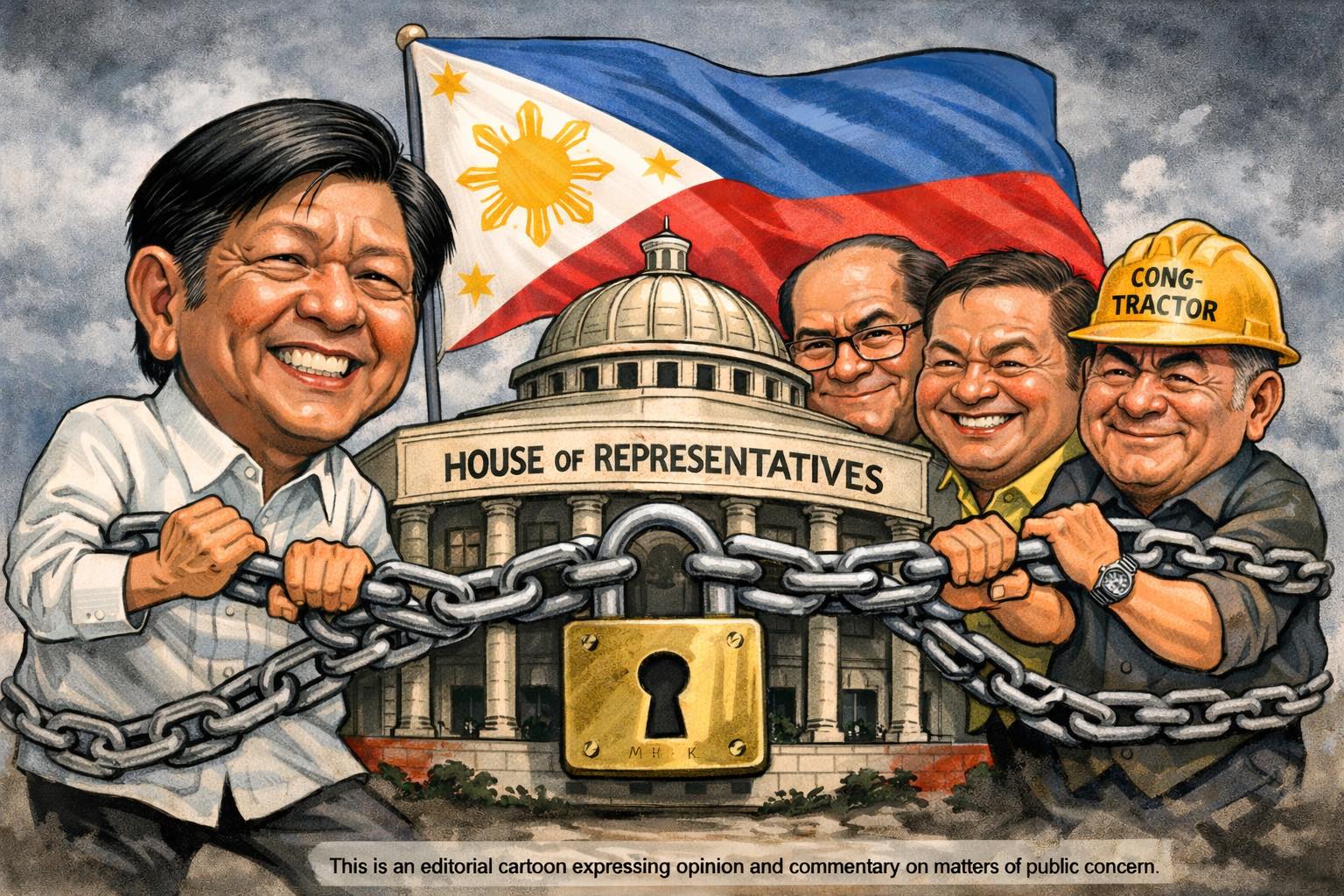
When an impeachment complaint is filed not because it is intended to be pursued toward genuine accountability, but merely to trigger the one-year bar, impeachment becomes a procedural firewall. This is not justice; it is timing. This is not moral courage; it is tactical maneuvering.
The Supreme Court itself warned against this abuse in Francisco Jr. v. House of Representatives, where it emphasized that the impeachment provisions of the Constitution must be exercised in good faith and in accordance with their spirit, not as a technical shield to evade accountability. The one-year bar, the Court explained, is not a license for procedural manipulation but a safeguard that must be applied with fidelity to the Constitution’s purpose.
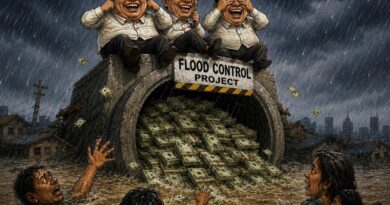
The implications are even more troubling when the initial complaint is filed by actors with clear personal or political proximity to power. It becomes more alarming when the endorsement by the House of Representatives includes names widely known to the public as “cong-tractors”—legislators who function simultaneously as lawmakers and contractors, whose interests are not purely legislative but financial.
In such circumstances, impeachment no longer appears as a challenge to power, but as internal crisis management—a way to contain damage rather than demand accountability. Oversight becomes hostage to self-interest.
From a broader political perspective, this is a form of pre-emptive capture of accountability mechanisms—where the system of checks and balances is seized in advance by actors who have direct stakes in public funds, government projects, and patronage. A complaint need not be false to be abusive; sometimes it is enough that it lacks determination, evidence, or genuine intent to reach the Senate.
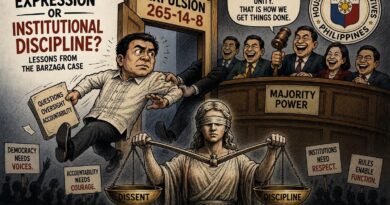
The damage caused by this practice is not merely political—it is institutional. When a system becomes accustomed to treating accountability as something that can be scheduled, managed, or neutralized through technicalities, the Constitution is reduced from a living document to a procedural script that can be manipulated by those in power.
History, however, teaches another truth: accountability cannot be suppressed forever. Anomalies left unanswered today accumulate in silence. Leadership responsibility does not expire like procedural bars; it compounds—and in time, it returns with greater weight.
In the end, the constitutional endgame is not simply about whether a President survives today. The real question is this: what kind of democracy are we building—a democracy of form, or a democracy of accountability?
When impeachment becomes a tactic, the people are the first victims. But when citizens remain vigilant and institutions are compelled to act with genuine purpose, the Constitution remains stronger than silence and stronger than fear.
In the rise of damage and the choice of power for silence, the Constitution is not a curtain on a stage—it is the light that reveals the true picture.